What Causes Malaria?
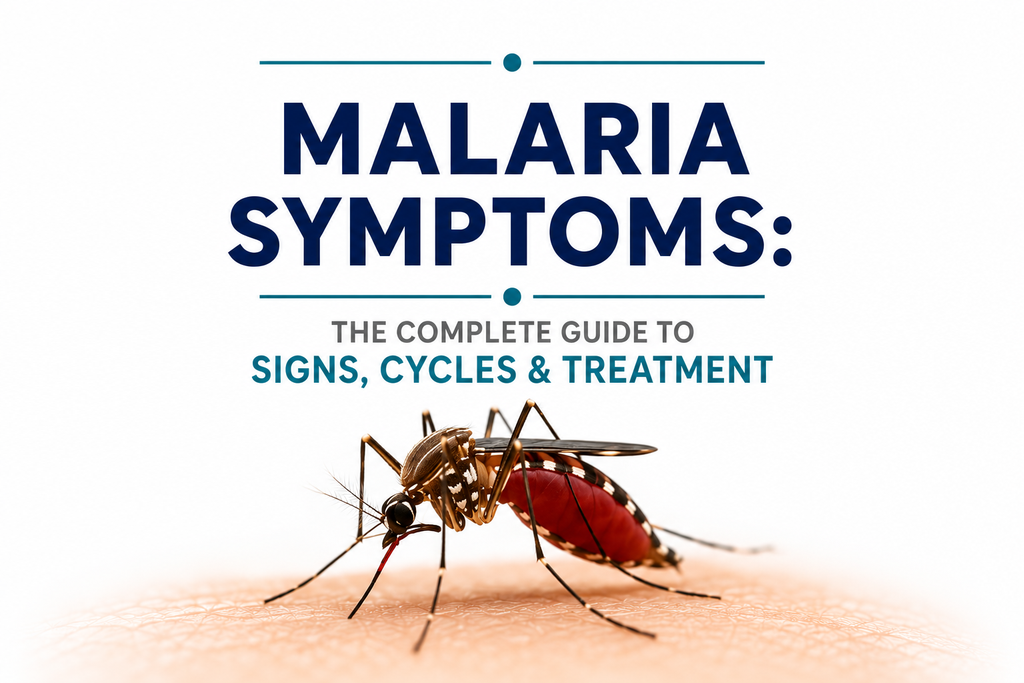
Malaria is caused by Plasmodium parasites transmitted through the bite of an infected female Anopheles mosquito, which typically bites between dusk and dawn. In India, the two most common species are:
- Plasmodium vivax — more common, generally less severe, but prone to relapse
- Plasmodium falciparum — less common but more dangerous, capable of causing severe complications quickly
The Classic Malaria Symptom Cycle
Malaria symptoms typically unfold in three repeating stages within a single fever episode:
1. Cold Stage (15–60 minutes)
- Sudden intense chills and shivering
- Feeling cold despite a rising internal temperature
2. Hot Stage (2–6 hours)
- High fever, often 103–106°F
- Severe headache
- Nausea, vomiting
- Body ache and weakness
3. Sweating Stage (2–3 hours)
- Profuse sweating
- Fever breaks and temperature drops
- Extreme fatigue, often followed by sleep
This entire cycle then repeats — every 24 hours, 48 hours, or 72 hours, depending on the malaria species involved.
Other Common Malaria Symptoms
- Fatigue between fever episodes
- Muscle and joint pain
- Mild jaundice (yellowing of eyes/skin) in some cases
- Enlarged spleen or liver, noticeable as abdominal fullness
- Loss of appetite
Severe Malaria — Warning Signs
Quick Answer: Severe malaria is a medical emergency — warning signs include confusion, repeated seizures, difficulty breathing, extreme weakness, dark or reduced urine, and yellowing of skin, and require immediate hospitalization, especially with P. falciparum infection.
Seek emergency care if you notice:
- Confusion, disorientation, or reduced consciousness
- Seizures
- Difficulty breathing or rapid breathing
- Very low blood pressure or fainting
- Dark-colored urine or significantly reduced urine output
- Marked yellowing of eyes or skin
- Severe anemia (extreme pallor, breathlessness on exertion)
How Malaria Is Diagnosed
- Rapid Diagnostic Test (RDT) — detects malaria antigens, gives results within 15–20 minutes
- Peripheral blood smear — the gold standard, identifies the specific Plasmodium species and estimates parasite load
- PCR testing — used in specific cases for higher sensitivity, though less commonly needed for routine diagnosis
Getting tested is essential because malaria symptoms overlap heavily with dengue, typhoid, and viral fever — a fever cycle alone isn't enough for a confirmed diagnosis.
Malaria Treatment
Treatment depends on the Plasmodium species and severity, and must be prescribed by a doctor:
- Uncomplicated malaria — oral antimalarial medication, typically completed over 3 days for falciparum or a longer course for vivax to prevent relapse
- Severe malaria — hospitalization with IV antimalarial medication, fluid management, and close monitoring
- Relapse prevention — P. vivax can remain dormant in the liver and cause relapses months later, so a full course of relapse-prevention medication is often prescribed
Never stop antimalarial medication early, even if the fever resolves quickly — incomplete treatment is a leading cause of relapse and drug resistance.
Preventing Malaria
- Sleep under mosquito nets, especially between dusk and dawn
- Use mosquito repellents on exposed skin during evening/night hours
- Install mesh screens on windows and doors
- Eliminate stagnant water around homes — this benefits both malaria and dengue prevention
- Use indoor mosquito coils or vaporizers where appropriate
- Consider antimalarial prophylaxis if traveling to high-risk regions, as advised by a doctor
Frequently Asked Questions
Q: How soon after a mosquito bite do malaria symptoms appear? A: Malaria symptoms typically appear 7 to 30 days after an infective mosquito bite, though P. vivax can occasionally take much longer or cause delayed relapses.
Q: Can malaria be cured completely? A: Yes, with a correctly completed course of antimalarial treatment, malaria is fully curable, though P. vivax requires additional relapse-prevention medication to clear dormant liver-stage parasites.
Q: Is malaria contagious between people? A: No, malaria spreads only through mosquito bites (or rarely through blood transfusion or shared needles) — not through casual contact, coughing, or sharing food.
Q: How is malaria different from dengue? A: Malaria typically causes a cyclical fever with chills and sweating at regular intervals, while dengue causes a continuous high fever with severe body pain and, in some cases, a rash — a blood test is the reliable way to distinguish them.
Q: Can you get malaria twice? A: Yes, previous infection doesn't provide lasting immunity, and reinfection with the same or different Plasmodium species is possible, so prevention remains important even after recovery.
Q: Does malaria always cause chills? A: Chills are a classic malaria symptom but not universal in every patient, particularly in early or partially treated infections, which is another reason a blood test is important rather than relying on symptoms alone.
Conclusion
Malaria's cyclical fever pattern is its most recognizable signature, but relying on symptoms alone can delay diagnosis and treatment. If you or someone in your household develops recurring fever with chills and sweating during monsoon season, get a rapid malaria test done promptly. With early diagnosis, malaria is very treatable — the risk comes almost entirely from delay.