Translate
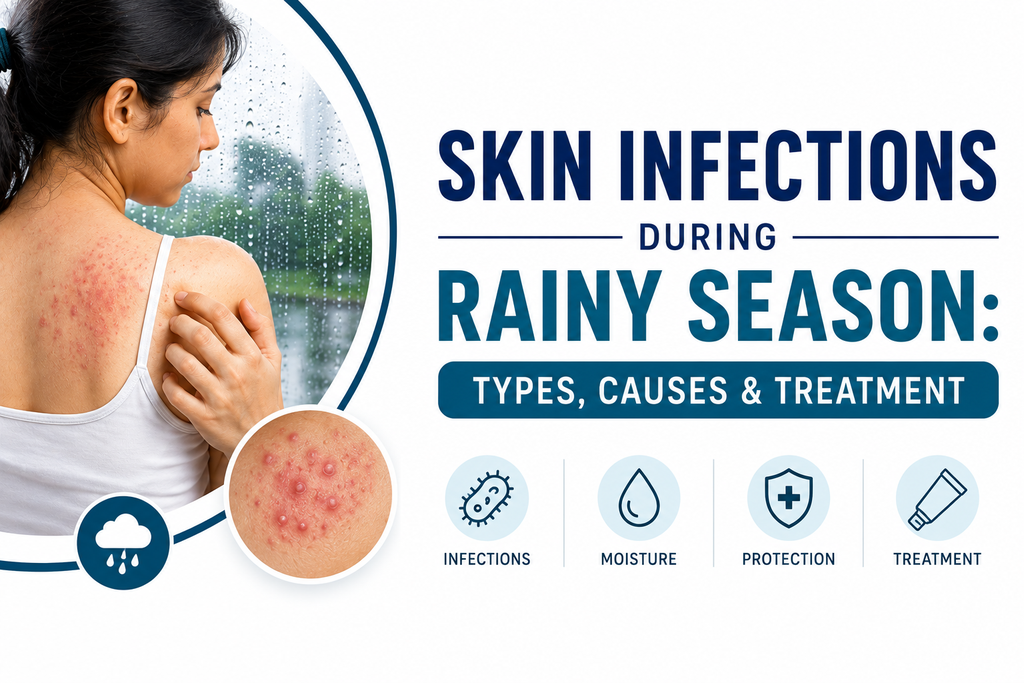
Why Skin Infections Spike During Monsoon
- Prolonged dampness on skin and clothing creates ideal conditions for fungal growth
- Sweat combined with humidity doesn't evaporate easily, keeping skin folds moist
- Wet footwear worn for extended periods softens skin and invites fungal/bacterial entry
- Reduced sun exposure means less natural antimicrobial effect on skin
- Contaminated puddle or floodwater can introduce bacteria to cuts and abrasions
Common Monsoon Skin Infections
1. Fungal Infections (Tinea/Ringworm)
- Where it appears: Groin, underarms, neck folds, feet (athlete's foot)
- Symptoms: Itchy, ring-shaped red patches with defined edges; scaling
- Cause: Dermatophyte fungi thriving in warm, moist skin folds
2. Athlete's Foot (Tinea Pedis)
- Where it appears: Between toes, soles of feet
- Symptoms: Itching, peeling skin, cracking, sometimes a foul odor
- Cause: Prolonged dampness inside wet shoes and socks
3. Folliculitis
- Where it appears: Anywhere with hair follicles, commonly thighs, arms, back
- Symptoms: Small, itchy, sometimes tender red bumps or pustules
- Cause: Bacterial infection of hair follicles, worsened by sweat and friction
4. Scabies
- Where it appears: Between fingers, wrists, waistline, skin folds
- Symptoms: Intense itching, especially at night; tiny burrow-like lines
- Cause: Mite infestation, more easily spread in crowded, damp conditions
5. Prickly Heat (Heat Rash / Miliaria)
- Where it appears: Neck, chest, back, skin folds
- Symptoms: Small red, itchy bumps, sometimes with a prickling sensation
- Cause: Blocked sweat glands in humid, sweaty conditions
6. Impetigo
- Where it appears: Face, hands, exposed skin, especially in children
- Symptoms: Red sores that develop a honey-colored crust
- Cause: Bacterial infection (commonly staph or strep), spreads through contact
Quick Answer
Quick Answer: Most monsoon skin infections are caused by fungi or bacteria thriving in prolonged dampness — keeping skin dry, changing out of wet clothes quickly, and using antifungal powder in skin folds prevents the majority of cases, while persistent, spreading, or painful rashes need a dermatologist's evaluation.
Comparison Table
| Infection | Main Trigger | Key Symptom | Typical Treatment |
|---|---|---|---|
| Ringworm/Tinea | Fungal, moist skin folds | Ring-shaped itchy patch | Topical antifungal cream |
| Athlete's foot | Wet shoes/socks | Itching, peeling between toes | Antifungal cream/powder |
| Folliculitis | Bacteria + sweat/friction | Itchy red bumps | Antibacterial wash, sometimes topical antibiotics |
| Scabies | Mite infestation | Intense night itching | Prescription scabicide cream |
| Prickly heat | Blocked sweat glands | Small itchy bumps | Cooling, loose clothing, calamine |
| Impetigo | Bacterial (staph/strep) | Honey-crusted sores | Topical/oral antibiotics |
Home Care Tips for Mild Skin Issues
- Keep skin thoroughly dry, especially in folds like underarms, groin, and between toes
- Use talcum or antifungal powder in sweat-prone areas
- Wear loose, breathable cotton clothing
- Change socks and underwear at least once daily, more if sweating heavily
- Avoid sharing towels, clothing, or footwear
- Wash affected areas gently with mild soap and pat dry rather than rubbing
Footwear & Foot Care During Monsoon
- Avoid wearing wet shoes for long periods — keep a spare, dry pair if possible
- Dry feet thoroughly, especially between toes, after any rain exposure
- Use antifungal foot powder daily during heavy monsoon weeks
- Choose open or quick-drying footwear over closed shoes when walking through wet areas
- Avoid walking barefoot in public wet areas like locker rooms or public showers
When to See a Dermatologist
- Rash that spreads rapidly or doesn't improve after a week of home care
- Signs of bacterial infection — increasing redness, warmth, swelling, or pus
- Fever accompanying a skin infection
- Intense itching that disrupts sleep, especially if others at home are also affected (possible scabies)
- Recurrent fungal infections despite consistent hygiene
Frequently Asked Questions
Q: Why does athlete's foot keep coming back every monsoon? A: Fungal spores can persist in shoes, socks, and damp environments, so if footwear isn't thoroughly dried or replaced and skin isn't kept consistently dry, reinfection is common — treating both the skin and disinfecting/drying footwear helps prevent recurrence.
Q: Are monsoon skin infections contagious? A: Fungal infections like ringworm and athlete's foot, as well as scabies and impetigo, can spread through direct contact or shared items like towels and clothing, so basic hygiene precautions matter for the whole household.
Q: Can prickly heat be prevented completely? A: It can be significantly reduced by wearing loose, breathable clothing, staying in cool and ventilated spaces, and keeping skin dry, though some individuals remain more prone to it in high humidity regardless of precautions.
Q: Is it safe to use over-the-counter antifungal creams without a doctor's advice? A: Mild, clearly fungal-looking rashes can often be treated with OTC antifungal creams for a short trial period, but if there's no improvement within 1–2 weeks, or if the diagnosis is uncertain, a dermatologist should evaluate it rather than continuing self-treatment indefinitely.
Q: Can diet affect monsoon skin infections? A: Diet doesn't directly cause fungal or bacterial skin infections, but a balanced diet supporting overall immunity can help your body resist and recover from infections more effectively.
Q: How long does it take for a fungal skin infection to clear up? A: With consistent antifungal treatment and dry-skin habits, most fungal infections improve within 2–4 weeks, though some stubborn cases may need a longer course under a dermatologist's supervision.
Conclusion
Monsoon skin infections are uncomfortable but almost entirely preventable with a few consistent habits: keeping skin dry, avoiding prolonged dampness, and treating minor issues early before they spread or worsen. If a rash doesn't respond to basic home care within a week, or shows signs of bacterial infection, don't wait — a dermatologist visit early on prevents a small issue from becoming a bigger one.